
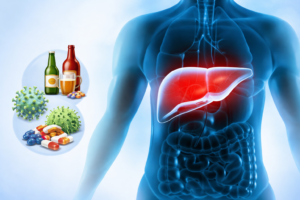
 Liver cancer occurs when malignant (cancerous) cells develop in the liver. The liver is one of the most vital organs in the body. It helps digest food, removes toxins, produces essential proteins and regulates metabolism. A person cannot survive without a functioning liver. Primary liver cancer begins in the liver itself.
The most common form, arising from the main liver cells.
Cancer that develops in the bile ducts inside the liver.
A rare tumor starting in the liver’s blood vessel lining.
Early stages may be silent. As the disease progresses, patients might experience:
If you or a loved one has chronic liver disease, these symptoms should never be ignored.
Many patients have no symptoms in the beginning. That is why regular surveillance with blood tests and ultrasound is crucial for people with cirrhosis, hepatitis B, hepatitis C or fatty liver disease.
Liver cancer develops after long-term damage to liver cells. When DNA changes accumulate, cells begin growing uncontrollably and form tumors.
You may have increased risk if you have:
High-risk individuals should undergo periodic screening.
Accurate diagnosis is the first step toward the right treatment plan. Evaluation may include:
The goal is to determine tumor size, number, liver reserve and spread.
Doctors classify liver cancer from very early to advanced stages based on tumor burden, liver function and general health. Early stages may be eligible for curative therapies, while later stages may require combined or palliative approaches.
Management is highly individualized. Under the guidance of Dr. Punit Singla, options may include:
Choosing the right therapy at the right time is critical.
In selected patients, liver transplantation offers the possibility of complete cure because it removes both the tumor and the diseased liver that caused it.
However, eligibility depends on tumor stage, overall fitness and transplant criteria. Early referral to a transplant specialist greatly improves the chances.
Waiting can allow tumors to grow beyond transplant criteria. Seeking expert evaluation early can open doors to curative treatment instead of only control measures.
No. When detected early, patients may undergo surgery or transplant with good long-term survival.
No. That’s why transplant becomes lifesaving when liver failure or cancer is advanced.
Not always. Many cases can be diagnosed confidently with imaging and blood markers.
Anyone with cirrhosis, hepatitis B/C, fatty liver disease or strong risk factors.
Yes. Fitness and liver function matter more than age alone.
Myth: Liver cancer means there is no hope.
Fact: Many patients today receive effective treatments, including curative options.
Myth: Surgery spreads cancer.
Fact: Surgery performed at the right stage can remove disease and prolong life.
Myth: Only alcoholics get liver cancer.
Fact: Viral hepatitis, fatty liver and metabolic disease are major causes.
Myth: If there are no symptoms, everything is fine.
Fact: Early liver cancer is often silent, which is why screening is vital.
If you are facing liver cancer or have been advised transplant evaluation, timely expert guidance can change the course of treatment.

Families choose this center for its blend of expertise, technology, and compassionate care.